
Why Full-Frame Window Installation Is the Better Choice for Your Home
Choosing replacement windows is only part of the decision. You also need to determine whether the existing frame should remain or the entire window should be removed back to the original opening. Full-frame and retrofit installations both have a place — but the condition of the existing window, frame and surrounding materials should determine which method makes sense.
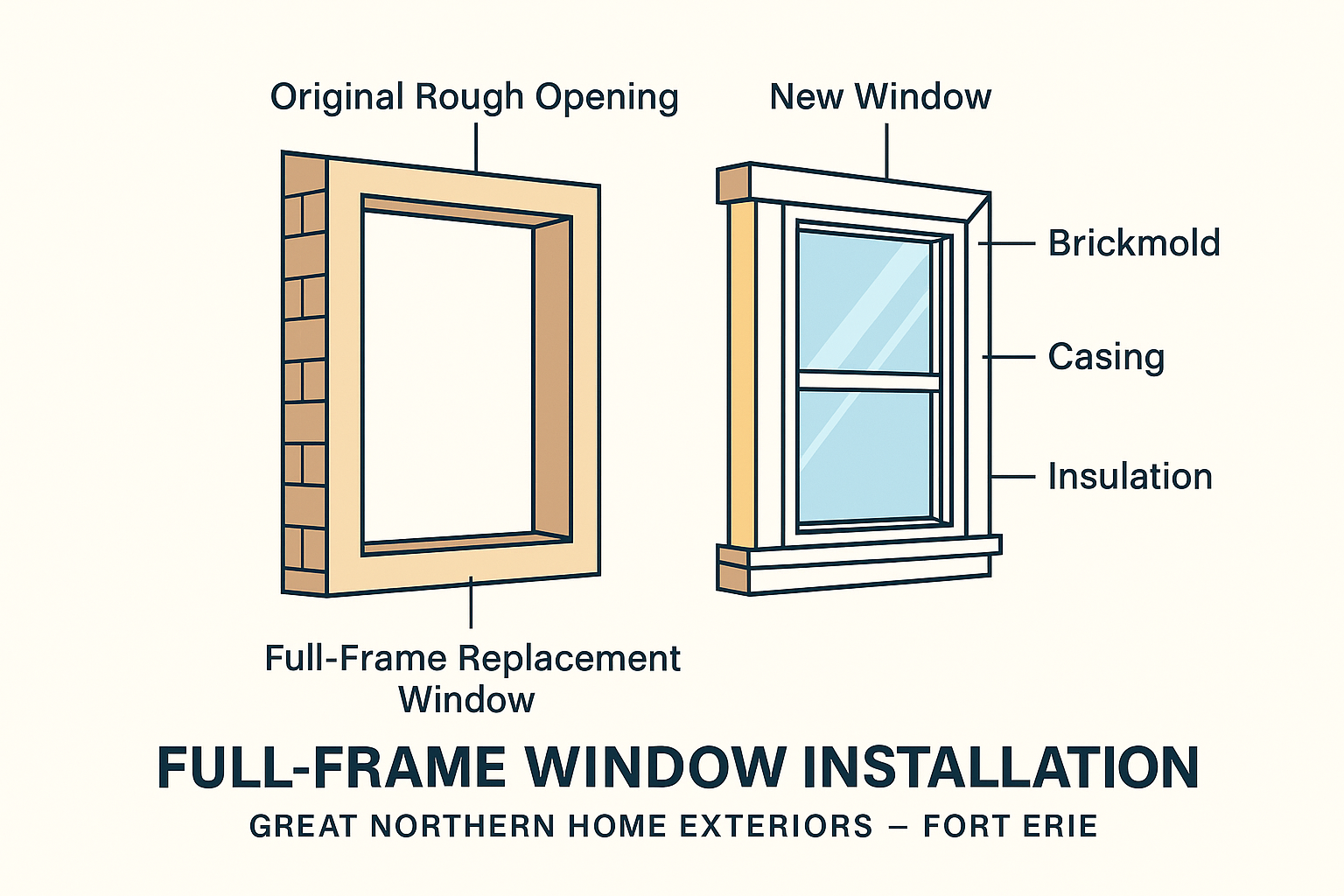
Full-Frame or Retrofit: Which Installation Is Better?
Neither method should be chosen simply because it is faster or because it is the option a contractor normally sells. Retrofit installation can work well when the existing frame and surrounding materials are sound. Full-frame replacement makes more sense when the existing frame should be removed, when there are concerns about deterioration or previous installation work, or when the homeowner wants the opening rebuilt from the rough opening outward.
What Full-Frame Installation Allows the Installer to Address
The main advantage of full-frame replacement is access. Removing the existing window assembly exposes areas that remain hidden during a typical retrofit installation.
Insulation and Air Sealing
Removing the existing frame provides access around the opening so old insulation and gaps can be evaluated and the new window can be insulated and sealed as part of the installation.
Hidden Conditions Become Visible
Deterioration, previous installation problems or moisture-related damage around the old frame may not be visible until the existing window is removed.
The Old Frame Is Removed
A retrofit unit occupies space within the existing frame. Full-frame installation removes that old frame instead of building the replacement window inside it.
Exterior and Interior Finishing Can Be Rebuilt
Because the installation starts deeper in the opening, new interior finishing and exterior trim or capping can be planned around the replacement window rather than simply working around the old assembly.
A Fresh Starting Point for Older Openings
Where an existing frame is deteriorated, poorly installed or simply no longer worth retaining, full-frame replacement allows the opening to be prepared for the new window instead of relying on the old frame as its foundation.
When Retrofit Window Installation Can Make Sense
Full-frame replacement is not automatically necessary for every opening. A properly evaluated retrofit installation can be a practical choice when the existing window assembly provides a sound base for the new unit.
The important part is making the decision from the condition of the opening — not assuming one installation method is right for every house.
- The existing frame is solid and suitable to remain.
- There are no visible concerns that make removal advisable.
- The homeowner wants to minimize disruption to surrounding finishes.
- The existing opening works well for the proposed replacement unit.
- The advantages of complete frame removal are not needed for that particular opening.
How GNHE Evaluates the Installation Method
The installation method should be discussed before the replacement windows are ordered. GNHE looks at the existing opening, surrounding materials and the homeowner's goals before recommending how the window should be replaced.
The objective is not to automatically sell the more extensive installation. It is to choose the method that makes sense for the actual opening and the finished result the homeowner wants.
Choose the Installation Method for the Opening — Not Just the Window
A quality replacement window still depends on a suitable installation. If the existing frame is sound and appropriate to retain, retrofit can provide an effective replacement. If the old frame or surrounding opening should be removed and rebuilt, full-frame installation provides access that a retrofit cannot.
GNHE installs both methods and can explain what is involved before you decide. For more information about available window configurations, glass and replacement options, visit our replacement windows page.
Planning to Replace Your Windows?
Great Northern Home Exteriors can review your existing openings, explain the difference between retrofit and full-frame installation, and provide a clear, no-pressure estimate for your project.