
Why Super Efficient Windows Can Sometimes Increase Heating Costs
A lower number on a window spec sheet doesn’t always mean better real-world performance. In cold climates like Niagara, the wrong glass package can block helpful winter sunlight — increasing heating demand in some homes.
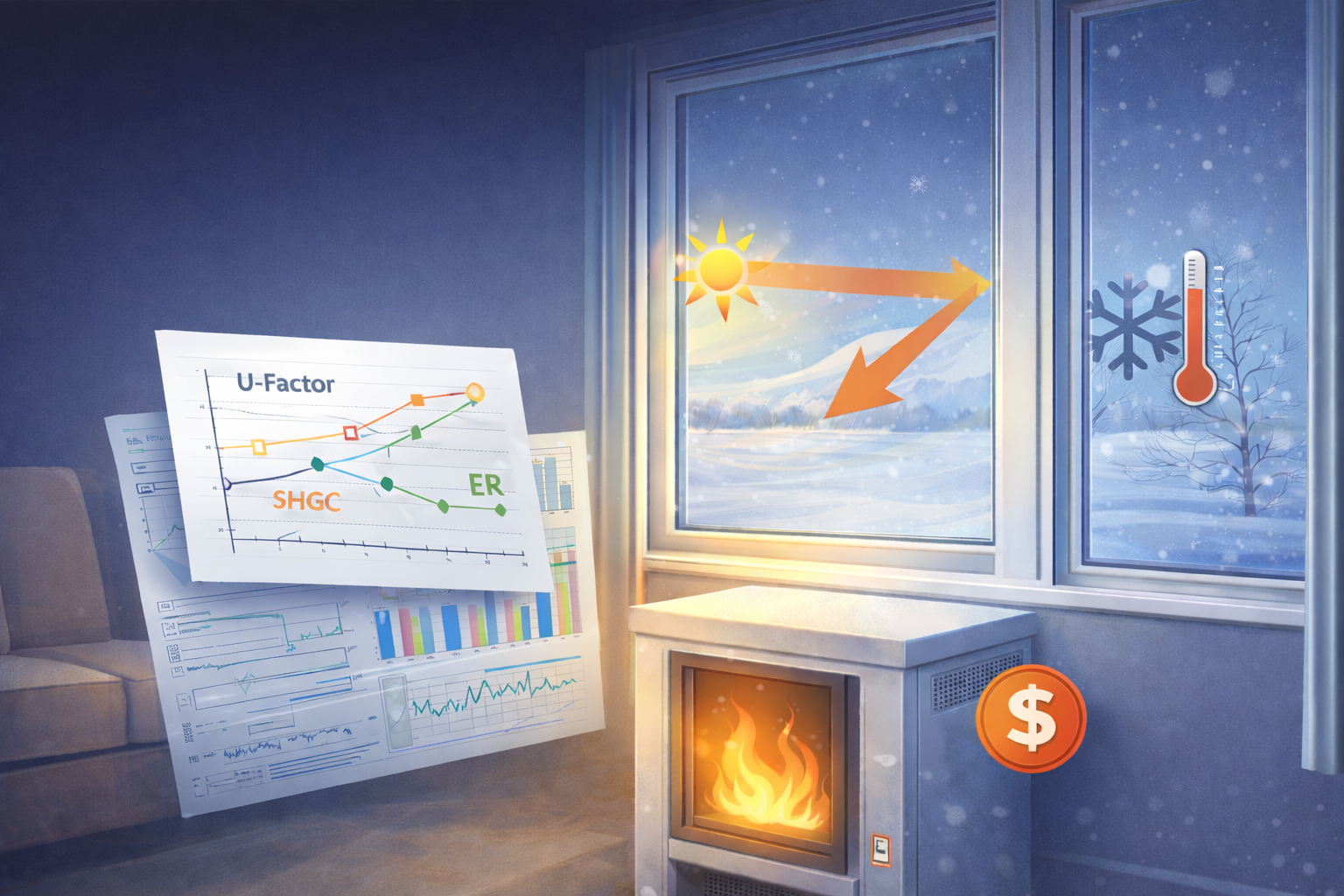
When windows block too much winter sunlight, homes can miss out on natural solar warmth — which may increase reliance on heating systems.
Two Window Ratings That Matter Most
U-Factor — How Well a Window Prevents Heat Loss
U-Factor measures how much indoor heat escapes through a window. A lower U-Factor means less heat loss, which generally improves winter efficiency.
SHGC — How Much Sun Heat Enters Your Home
Solar Heat Gain Coefficient (SHGC) controls how much warmth from the sun passes through glass.
- Lower SHGC = blocks more sun heat (often helpful in summer)
- Moderate SHGC = allows beneficial winter solar warmth
Why “Ultra Efficient” Can Work Against You
Some ultra-efficient glass packages lower U-Factor but also reduce SHGC significantly. This can unintentionally block free winter heat from sunlight — especially in sun-facing rooms.
A Real-Life Example
- A south-facing living room receives winter sunlight
- That sunlight can naturally warm the space
- If glass blocks too much sun heat, the room may feel cooler
- Your heating system may run more to maintain comfort
The Smart Approach: Choose the Proper Glass Package
The goal isn’t chasing the lowest number — it’s achieving the best balance between insulation and solar heat. A knowledgeable company evaluates sun exposure, shading, room use, and comfort goals before recommending the right glass package.
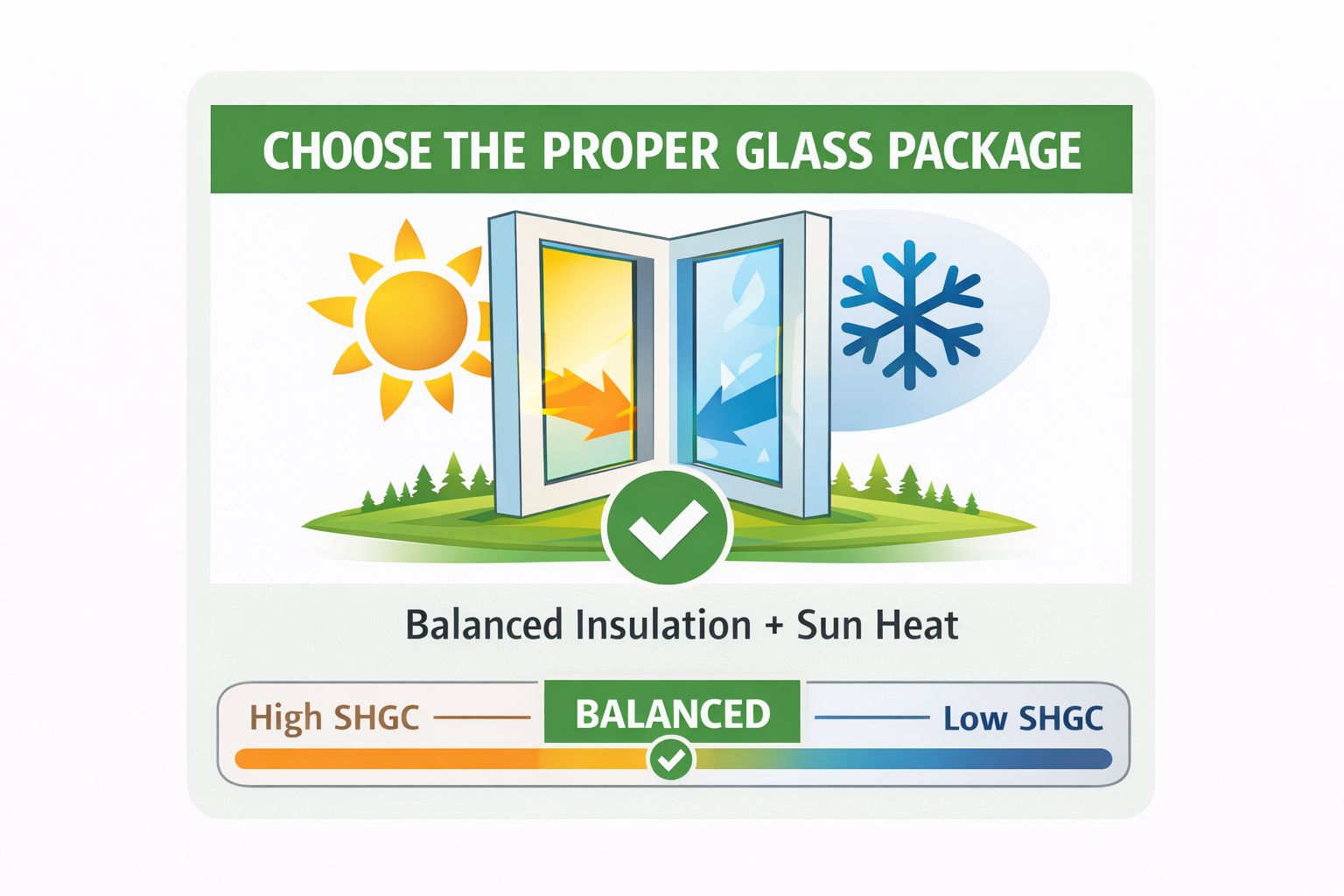
- Low U-Factor reduces heat loss — helpful for winter comfort
- Very low SHGC can block beneficial winter sun
- Too much solar blocking may increase heating demand
- The best windows balance insulation and solar heat gain
- The right choice depends on orientation, shading, and comfort goals
- A knowledgeable company helps select the proper glass package for real-world performance
What About ER and UV?
ER — Canada’s Balanced Energy Score
The Canadian Energy Rating (ER) balances insulation, solar heat gain, and air leakage into one combined score — often more realistic than focusing on a single metric.
UV Protection — Helpful but Not the Whole Story
UV protection helps reduce fading on floors and furniture. Still, glass selection should consider how much natural light and solar warmth enters the home.
Want a Deeper Look at Glass Technology?
Learn how advanced coatings like I-89 glass reflect indoor heat back into your home: What Is I-89 Glass?
FAQ: Super Efficient Windows & Heating Costs
Can super efficient windows actually increase heating costs?
Yes — if the glass package blocks too much winter solar heat, heating systems may run more in sun-exposed rooms.
Is lower U-Factor always better?
Lower U-Factor helps reduce heat loss, but overall performance depends on balancing insulation and solar heat gain.
Should I always choose low SHGC glass?
Not always. Low SHGC can reduce summer overheating but may limit beneficial winter solar warmth.
What matters more — U-Factor or ER?
ER is often more useful because it reflects combined real-world performance rather than focusing on one metric alone.
What’s the best approach for Niagara homeowners?
Choose a balanced glass package that fits your home’s sunlight exposure, climate, and comfort needs — not just the lowest advertised number.
Final Thought
The most efficient window on paper isn’t always the best in real life. The right window improves comfort, natural light, and real energy performance — not just marketing claims.